The VHS aesthetic, explained
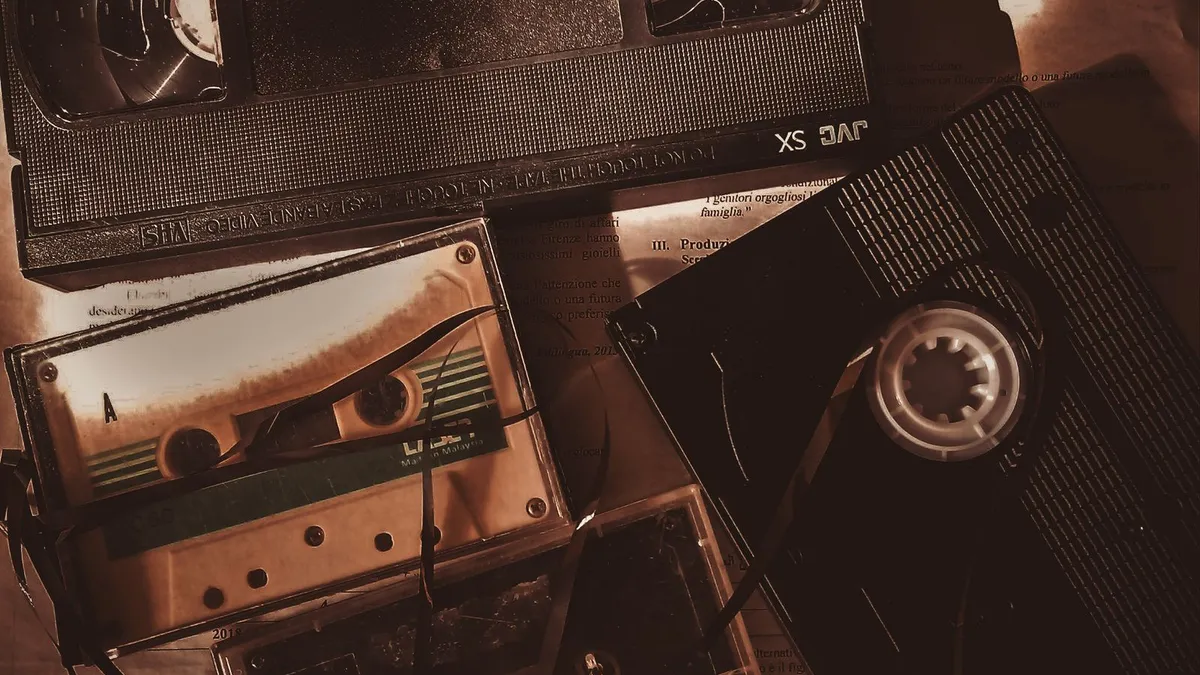
The VHS aesthetic recreates the flaws of 1980s home video: soft resolution, warm colour bleed, horizontal scanlines, chroma noise, a timestamp in the corner and occasional tracking distortion. Those were technical limitations at the time; now they read as warmth, memory and 'the past'.
What VHS actually did to an image
- Low resolution — roughly 240 lines, so fine detail turned to mush.
- Colour bleed — chroma smeared sideways, especially reds.
- Scanlines — faint horizontal banding from interlaced fields.
- Noise and dropout — speckle, and brief white streaks where the tape had worn.
- Tracking errors — a juddering band of distortion when the heads and tape misaligned.
- The timestamp — a camcorder's burned-in date in a blocky font.
Why flaws became a style
Those artefacts are tied to a specific era and a specific kind of footage — birthdays, holidays, school plays. Seeing them now triggers the feeling of watching a home movie, so designers add them deliberately to make new footage feel personal and old.
How it is faked
Video editors use plugins that layer grain, chroma offset, scanline overlays and occasional tracking glitches, often over a slightly desaturated, warm grade. An AI 80s photo bakes a gentle version of this into the still — soft grain, mild colour warmth, a faint scanline texture — so the portrait feels captured on tape rather than shot today.
Upload a photo and 80s Filter restyles it into a 1980s portrait — hair, wardrobe, film look and all.
Open 80s Filter